
The 9 healthiest types of juice
Although squeezed juice is enjoyed all over the world, it is a controversial drink.
When it comes to whether it's healthy, many people are divided . Some claim it has too much sugar, while others advocate its high nutrient content.
This article reviews the 9 healthiest juices and discusses whether juice is a healthy choice in general.
1. Cranberry
Tart and bright red , cranberry juice offers many benefits.
One cup (240 ml) of cranberry juice contains:
- Calories: 116
- Protein: 1 gram
- Carbohydrates: 31 grams
- Fiber: 0.25 grams
- Sugar: 31 grams
- Potassium: 4% of the recommended daily intake (DV)
- Vitamin C: 26% of the recommended daily intake
- Vitamin E: 20% of the recommended daily intake
- Vitamin K: 11% of the recommended daily intake
Cranberry juice is known for its ability to protect against urinary tract infections (UTIs). Although research on this effect has been mixed, a recent review found that drinking cranberry juice reduced the risk of UTIs by 32.5%.
This juice is also rich in antioxidants , including anthocyanins, flavonols, procyanidins, and vitamins C and E, which can help protect cells from damage caused by free radicals.
2. Tomato
Tomato juice is not only a key ingredient in a Bloody Mary, but it is also enjoyed on its own as a delicious and healthy drink.
While many people consider tomatoes a vegetable because of their culinary uses, they are biologically a fruit . However, many companies classify tomato juice as a vegetable juice because of its flavor and low sugar content.
One cup (240 ml) of tomato juice contains:
- Calories: 41
- Protein: 2 grams
- Carbohydrates: 9 grams
- Fiber: 1 gram
- Sugar: 6 grams
- Folate: 12% of the recommended daily intake
- Potassium: 11% of the recommended daily intake
- Vitamin A: 6% of the recommended daily intake
- Vitamin C: 189% of the recommended daily intake
- Vitamin E: 5% of the recommended daily intake
- Vitamin K: 5% of the recommended daily intake
Tomato juice is especially rich in vitamin C , a powerful antioxidant that supports iron absorption and promotes skin and immune system health.
It is also a good source of lycopene , a carotenoid and antioxidant that gives tomatoes their red color. In fact, it is reported that 80% of the lycopene in the diet comes from tomato juice, spaghetti sauce or pizza sauce.
Lycopene may reduce the risk of heart disease and stroke. For example, one study linked increased lycopene intake to a 13% lower risk of heart disease.
However, tomato juice can be very high in salt , a mineral that can raise blood pressure when consumed in excess. Since most people consume too much salt, try to choose low-sodium options whenever possible.
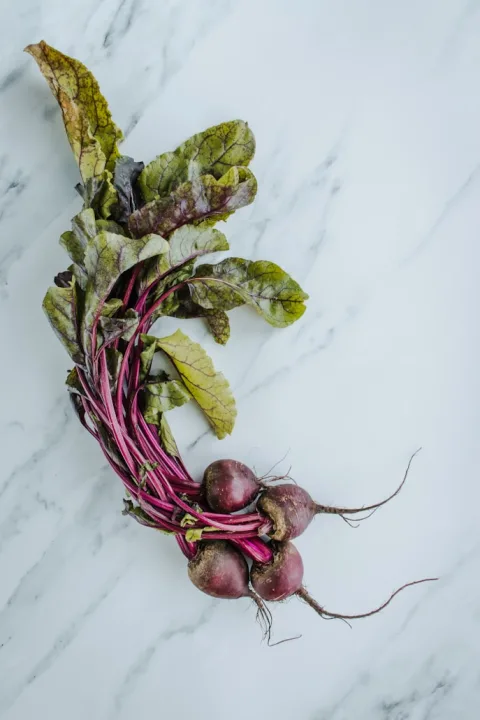
3. Beetroot
Beetroot juice has gained popularity in recent years due to its health benefits.
This exceptionally colored juice is obtained by cold pressing beets and, if desired, adding water to dilute the flavor. If the flavor is still too intense for you, add a little lemon.
One cup (240 ml) of beetroot juice contains:
- Calories: 70
- Protein: 1 gram
- Carbohydrates: 18 grams
- Fiber: 1 gram
- Sugar: 13 grams
It is relatively low in sugar, as most vegetables naturally have less sugar than fruit.
What's more, beets are an excellent source of betalains , pigments that give the vegetable its deep red color. They act as powerful antioxidants , potentially reducing the risk of heart disease, inflammation, and certain types of cancer.
Beetroot juice is also rich in inorganic nitrates, which have been shown to increase athletic performance and reduce blood pressure and the risk of heart disease.
However, keep in mind that the content of inorganic nitrates in beetroot juice depends on the variety and growing conditions of the vegetable, as well as the processing method.
Because nitrate content is not listed on most labels, it is difficult to know to what extent drinking beetroot juice will provide nitrate-related benefits.
4. Apple
Apple juice is one of the most popular types of juice .
There are two main types - cloudy and clear . Cloudy apple juice contains pulp, while clear apple juice is pulp-free.
A 1-cup (240 ml) serving of apple juice contains:
- Calories: 114
- Protein: less than 1 gram
- Carbohydrates: 28 grams
- Fiber: 0.5 grams
- Sugar: 24 grams
- Potassium: 5% of the recommended daily intake
- Vitamin C: 3% of the recommended daily intake
Apple juice is a moderate source of potassium , a mineral that acts as an electrolyte and is important for nerve signals and heart health.
Although naturally low in vitamin C, many commercial varieties are fortified with vitamin C , providing up to 106% of the recommended daily intake per cup.
Furthermore, it is rich in antioxidant compounds such as flavonoids and chlorogenic acid , which help neutralize free radicals that damage cells.
Among the different types, cloudy apple juice has the most antioxidants. One study found that it has 2-5 times the antioxidant content of clear apple juice.
5. Plums
Plums are enjoyed as a snack, but plum juice is another popular option.
One cup (240 ml) of prune juice contains:
- Calories: 182
- Protein: 1.5 grams
- Carbohydrates: 45 grams
- Fiber: 2.5 grams
- Sugar: 42 grams
- Iron: 17% of the recommended daily intake
- Magnesium: 9% of the recommended daily intake
- Manganese: 17% of the recommended daily intake
- Potassium: 15% of the recommended daily intake
- Vitamin B2: 14% of the recommended daily intake
- Vitamin B3: 13% of the recommended daily intake
- Vitamin B6: 33% of the recommended daily intake
- Vitamin C: 12% of the recommended daily intake
- Vitamin K: 8% of the recommended daily intake
Plum juice is rich in B vitamins , which play a role in metabolism, production of DNA and red blood cells, and skin and eye health.
Furthermore, it is widely used as a remedy for constipation , especially in the elderly. Its fiber content appears to help soften stools and act as a mild laxative.
It is also a good source of antioxidants, such as vitamin C and phenolic compounds.
Although plum juice is a natural source of sugar , it is best to limit your intake to a small glass per day or dilute it with water.
6. Pomegranate
Pomegranate juice has gained popularity in recent years for its nutritional benefits, and it also adds a vibrant splash of color to your day.
A 1-cup (240 ml) serving of pomegranate juice contains:
- Calories: 134
- Protein: less than 1 gram
- Carbohydrates: 33 grams
- Fiber: 0.25 grams
- Sugar: 32 grams
- Potassium: 11% of the recommended daily intake
- Vitamin C: less than 1% of the recommended daily intake
- Vitamin K: 22% of the recommended daily intake
Pomegranate juice is rich in vitamin K , which helps blood clotting, heart health and bone development.
It is also rich in the antioxidant anthocyanin, which gives the rosehip its characteristic dark red color.
Finally, many varieties contain added vitamin C, helping you reach up to 27% of your recommended daily intake.
7. Acai berry
Acai berries are small , round berries that come from the acai palm tree.
Their delicious juice has an enticing, dark purple color.
One cup (240 ml) of acai berry juice contains:
- Calories: 91
- Protein: 1 gram
- Carbohydrates: 13 grams
- Fiber: 2 grams
- Sugar: 9 grams
Given that it has only recently gained popularity, the antioxidant content of acai fruit has been widely studied.
Acai juice is rich in various antioxidants, especially flavonoids, ferulic acid and chlorogenic acid. A diet rich in these compounds is associated with a lower risk of heart disease and mental decline.
In fact, acai berries contain significantly more antioxidants than blueberries, which are well-known for their disease-fighting compounds.
Finally, a study in 14 participants with osteoarthritis found that drinking acai berry juice for 12 weeks significantly reduced perceived pain . However, larger studies are needed to better understand this effect.
8. Orange
Orange juice is a classic breakfast around the world and is well known for its nutritional properties.
One cup (240 ml) of orange juice contains:
- Calories: 112
- Protein: 2 grams
- Carbohydrates: 26 grams
- Fiber: 0.5 grams
- Sugar: 21 grams
- Folate: 19% of the recommended daily intake
- Potassium: 11% of the recommended daily intake
- Vitamin C: 138% of the recommended daily intake
Orange juice is a significant source of vitamin C , an antioxidant that is essential for skin health and iron absorption.
It is also rich in phenolic compounds , such as cinnamic, ferulic, and chlorogenic acids. These antioxidant compounds help fight free radicals, which can damage cells and lead to disease.
A study of 30 people found that drinking orange juice after a meal high in fat and carbohydrates led to significantly lower levels of inflammation compared to drinking water. Researchers attributed this to the antioxidants in orange juice.
You can buy orange juice with or without pulp. The pulp adds a little fiber, although not a significant amount.
Additionally, many types of orange juice have added calcium to support bone health.
9. Grapefruit
Grapefruit juice is a sour drink that many people enjoy.
One cup (240 ml) of grapefruit juice contains:
- Calories: 95
- Protein: 1.5 grams
- Carbohydrates: 19 grams
- Fiber: 1.5 grams
- Sugar: 20 grams
- Folate: 9% of the recommended daily intake
- Potassium: 8% of the recommended daily intake
- Vitamin C: 96% of the recommended daily intake
- Vitamin E: 4% of the recommended daily intake
Grapefruit juice is rich in disease-fighting antioxidants like vitamin C and a compound known as naringin.
However, processing fruit reduces the content of certain antioxidants . For example, whole grapefruit is rich in beta-carotene and lycopene, but grapefruit juice does not contain these nutrients.
It is important to know that grapefruit and its juice interact with more than 85 medications, including blood thinners, antidepressants, and cholesterol and blood pressure medications.
This is due to compounds in grapefruit known as furanocoumarins , which interfere with the liver's ability to process medications. Therefore, it is crucial to speak with a healthcare professional before consuming grapefruit and its derivatives.
Source: https://www.healthline.com/nutrition/healthiest-juice