

Megahome herbal distiller (used)
SKU: 5633
€360.00
Product currently not available.
Enter your email address and we will notify you when the product becomes available again.
Lowest Price Last 30 days
Megahome herbal distiller (used): €360.00
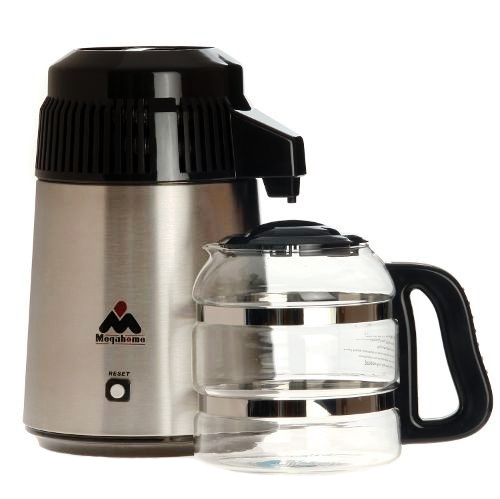
Megahome herbal distiller (used)
SKU: 5633
€360.00
Product currently not available.
Used device in excellent condition. Comes with a full 3-year warranty.
ABOUT THE HERBAL DISTILLATOR:
The Megahome herbal distiller is used for distilling various herbs and obtaining hydrolates. It is possible to obtain a very thin layer of essential oil droplets – depending on the specifics of the plant itself (how much essential oil is obtained per kilogram of content). The herbal distiller is almost the same device as the Megahome water distiller. The same 4-liter pot, the same glass jug, citric acid for cleaning, a lid with a fan – the only thing is that there is a protective mesh inside the lid so that the contents of the distiller do not enter the fan. Another practical thing is that the pot has an additional switch to start the operation and the distillation itself, in addition to the existing ignition button.
DISTILLATION OF HERBS:
For home distillation of herbs, this device is excellent and quite satisfactory. It is easy to use and wash. The package includes citric acid for cleaning and maintaining the pot. After you use it up, buy new citric acid and continue washing with it, or you can also use vinegar - pour it into the pot to the level where it is dirty and leave the vinegar to work for a while and then rinse. It is important that after each distillation of herbs, rinse the pot and the lid of the pot well to wash out the smell of previously distilled herbs. Distill the herbs in a ventilated room or in a room that you do not go to often, due to the intense and intoxicating smells that spread during distillation. When the herbs are pressed to the bottom of the pot as much as possible, it is possible for a piece of the plant to "stick" or "burn" to the bottom, which is very easy to clean by pouring vinegar on that part or leaving it soaked in water.
The distillation of herbs and the distillation products themselves depend, as already mentioned, on the plants used for distillation. It would be desirable to have a basic knowledge/study of the plant beforehand in order to know what kind of and how strong the hydrosol can be expected depending on the ratio of herbs and water used (1:1, 2:1, :1 or other - water:herb ratio) and how much essential oil is obtained from that plant in general and from what quantity essential oil can actually be seen and obtained. The lower the ratio of water to hydrosol, the stronger, more concentrated and better quality the resulting hydrosol. Some even make hydrosols with a very strong ratio so that such hydrosols can be diluted. It is best to follow practical advice with the capabilities of this herbal distiller. After just a few distillations, when the user of the herbal distiller becomes familiar with their new device, it is easier to guess how much and what kind of herbs to put in and in what ratio. For example, you can think about it this way: is my plant more woody, leafy, floral, or spicy, how much water will it absorb, should I add more water or less, what is the practice like, how much is really recommended in the professional literature, and can essential oil be obtained from that plant, is the plant male or female, should I use a male or female plant, and what kind of hydrosol do I want to obtain and what do I need it for? These are some of the possible questions we can ask ourselves before each distillation of a plant. The contents that are placed in the distiller's pot may or may not be submerged in water - this also depends on the structure of the plant and its specificity, so the most important proportions are the ones we work with.
For herbal distillation, the most important thing is that the herbs are FRESH!
You will get a quality hydrosol when you work with fresh ingredients – fresh herbs. After a few days, you will have a hydrosol and can make it, but it will not have as much fresh juice from the plant and it may be a different color – much lighter. You especially need to be careful with herbs that wilt quickly, such as coriander. For cinnamon or other woody and crusty ingredients, it is not so important to be careful and up-to-date, but in any case it is desirable that the ingredients are as fresh as possible.
Hydrosols have a very short shelf life – some last shorter, some longer.
Whatever you do, wear medical gloves and have disinfected laboratory beakers and other equipment you use when handling or storing the hydrosol. It would be advisable to optimize the amount of hydrosol by estimating how much hydrosol you really need and making enough of it. It is always better to have the freshest hydrosol (due to its short shelf life) for all preparations, but this of course depends on the season and the availability of certain herbs. Those who want to extend the shelf life of the hydrosol can use some of the natural preservatives.
A very important item is the storage of the hydrolate itself.
The general guideline for storing hydrolate would be to store it in disinfected and preferably dark glassware. These can be newly purchased small bottles or larger bottles. Old glassware from juice or the like will also work, but most importantly, it must be well washed and disinfected.
What if you get a few drops of essential oil on the surface of the hydrosol?
The easiest way to collect essential oil from the surface of the hydrosol is with a small dropper, which is used for all essential oils packaged in 1 ml. It is best to buy small dark glass bottles in which you can immediately store the essential oil and the corresponding dropper. With the dropper, you gently take the essential oil from the surface and transfer the contents to a 1 ml bottle. You can see an example of such a bottle and dropper in the following image.
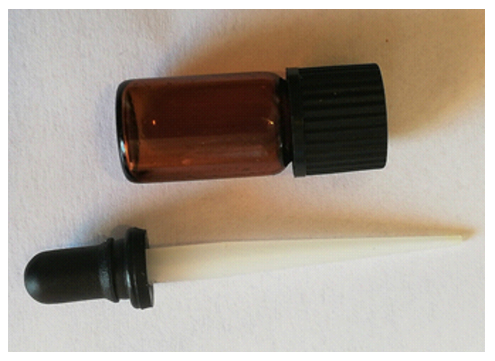
What does the process of collecting essential oil look like :
CLICK FOR A DESCRIPTION OF THE PROCESS FOR OBTAINING LAUVER HYDROLATE
The rule is that substances are distilled with the help of steam that :
- do not dissolve in water,
- have up to 15 or a maximum of 20 carbon atoms,
- are stable enough to withstand heating to 100°C,
- do not chemically react with water
The oldest method of distillation is carried out by placing plant material in a container/heating body and two to six times the amount of water that is heated to boiling. This is water distillation. If the plant material is separated on a mesh and does not come into contact with water, then it is water-steam distillation. The water steam carries the particles of essential oil with it, passes through a tube cooled by water, during which condensation of water and essential oils occurs. They are collected together in a special container, and since essential oils do not dissolve in water, the layers are separated. Essential oils are generally lighter than water, so they collect on the surface, and the water under the essential oil also collects and is called hydrolate or floral water.
Color: stainless steel-black
Model: MH-DA4B
Power: 320W
Duration of distillation of herbs: depending on the content 5-10 hours
Duration of water distillation (4l): 11 hours
Warranty: 3 years
Dimensions: Distiller: 23.5 x 36.5 cm
Jug: 20 x 20 cm
Capacity: 4 liters
Consumption: up to 3 kW per distillation (2-3 kn)
Customer Reviews
- 0
- 0
- 0
- 0
- 0
Most helpful positive review
No reviews yet.


